
 简体中文
简体中文 Русский
 Français
 Português
 Español
 لالعربية

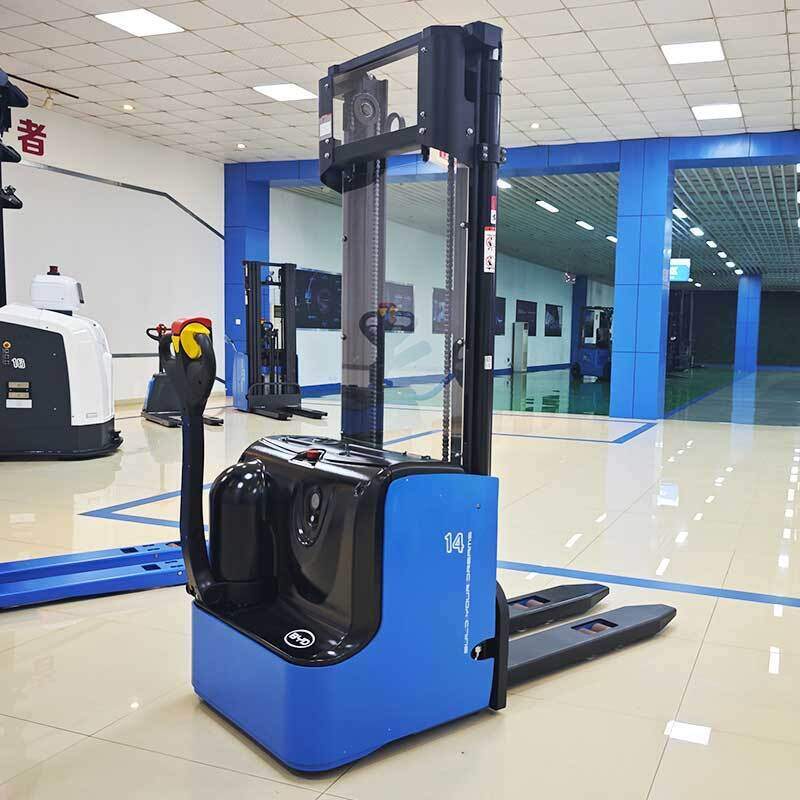
Proper regulation of mast lowering speed is one of the core links to guarantee safe electric forklift cargo handling, as unreasonable parameter settings are closely related to common operation hazards including cargo falling, mast collision and accidental personal injury in daily warehouse scenarios.
Before starting any parameter adjustment work, operators need to complete full pre-preparation to avoid unnecessary risks. First, park the electric forklift on a flat, hardened ground, cut off the main power supply and wait for 3 minutes to release the residual pressure inside the hydraulic system. Do not carry out any adjustment work on sloped ground or uneven site. Clear the surrounding 3-meter range of irrelevant personnel, scattered obstacles and stacked goods to make sure the whole test process has enough safe space. It is also recommended to mark the corresponding parameter adjustment record form in advance to record data of different load states for later check.
For the core parameter adjustment process, personnel need to match the actual load condition to set reasonable values. Under no-load state, the maximum mast lowering speed should not exceed the general industry recommended safety threshold. For medium load scenarios, reduce the opening of the flow control valve appropriately to limit the falling speed. For full load working conditions, keep the natural mast lowering speed within the range that the operator can monitor the whole process visually, to prevent unexpected speed surge caused by gravity acceleration. It is not allowed to arbitrarily raise the pressure relief threshold of the hydraulic pipeline to chase higher operation efficiency.
After the preliminary adjustment is finished, complete multi-stage verification to confirm the parameter applicability. Conduct test lowering respectively in three height sections: high position over 2 meters for loading and unloading, middle position between 1 meter and 2 meters for transit, low position below 1 meter for stacking. Record actual lowering speed under different load weights, and confirm no abnormal conditions including stuck movement, sudden drop or strange noise exist. Then carry out full process test with real loads, collect feedback from frontline operators, and make fine adjustments for different common cargo types such as fragile goods, heavy solid cargo and scattered parts. Reserve around 10% of parameter floating redundancy to adapt to viscosity fluctuation of hydraulic oil caused by ambient temperature change.
In daily follow-up operation, arrange regular recheck of related parameters every 3 months. For working scenarios with long-term low or high temperature environment, increase the recheck frequency properly. Once operators find abnormal acceleration of mast lowering, they should stop the operation immediately and contact professional maintenance personnel for troubleshooting, instead of modifying the original preset safety parameter boundary randomly. Such standardized operation can effectively reduce operation hidden dangers, and ensure the stability of warehouse material handling work.


