
 简体中文
简体中文 Русский
 Français
 Português
 Español
 لالعربية

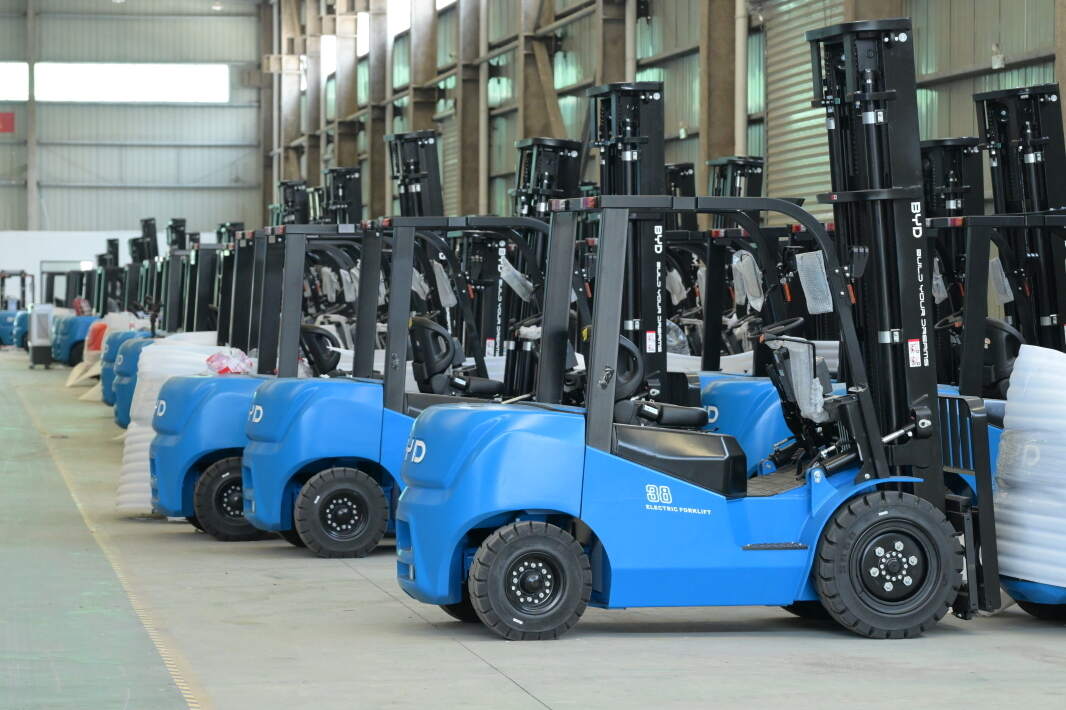
As the global logistics and warehousing industry gradually prioritizes low-carbon operation, electric forklifts have become one of the widely adopted material handling equipment in indoor and closed working scenarios, for their low noise, zero local emission and relatively low long-term operating cost. Reasonable use and regular maintenance can help users give full play to the use value of such equipment, and reduce unnecessary operating cost in daily scenarios.
Core Advantages and Applicable Scenarios of Electric Forklifts
Unlike internal combustion forklifts, electric forklifts rely on stored electrical energy to drive the traveling and loading and unloading systems, they are more suitable for enclosed spaces such as food processing workshops, e-commerce distribution centers, pharmaceutical storage areas, where strict requirements are set for air quality and working noise. Users can select corresponding load capacity and lifting height parameters according to the daily handling task volume, to match the actual operation demand without redundant performance waste, and adapt to the narrow channel operation environment in most standard warehouses.
Standardized Daily Operation Norms
To ensure stable operation status, operators need to receive systematic pre-post training before officially using electric forklifts. Before each shift, they need to check the remaining power level, the flexibility of lifting forks, the sensitivity of braking systems and the integrity of safety warning devices, to eliminate hidden risks in advance. During operation, overloading operation, long time of high-speed driving on uneven roads, and frequent sharp steering should be avoided as much as possible, to reduce unnecessary wear of the power system and walking components, and lower the probability of unexpected equipment failure.
Scientific Maintenance to Extend Service Life
Regular scientific maintenance can effectively extend the overall service cycle of electric forklifts. For the power storage system, users should avoid long-term full power storage or long-term complete power depletion, follow the specified charging process in a dry and ventilated charging area, and regularly clean the dust on the surface of the power module to ensure good heat dissipation. For the transmission and hydraulic systems, regular inspection of lubricating oil residue and hydraulic oil tightness can effectively reduce component wear, and avoid unexpected downtime that affects the overall operation rhythm of the warehouse.
Feasible Energy Efficiency Optimization Tips
There are many practical methods to improve the energy efficiency of electric forklifts in daily use. Arranging the handling routes reasonably to reduce repeated empty driving, adjusting the lifting speed according to the actual weight of the goods, and avoiding unnecessary long-time idling after starting the equipment, all can effectively reduce the average energy consumption per unit of handling task. Such small adjustments can bring considerable operating cost reduction for long-term large-scale application scenarios, and support the efficient and stable operation of the whole material handling system.


