
 简体中文
简体中文 Русский
 Français
 Português
 Español
 لالعربية

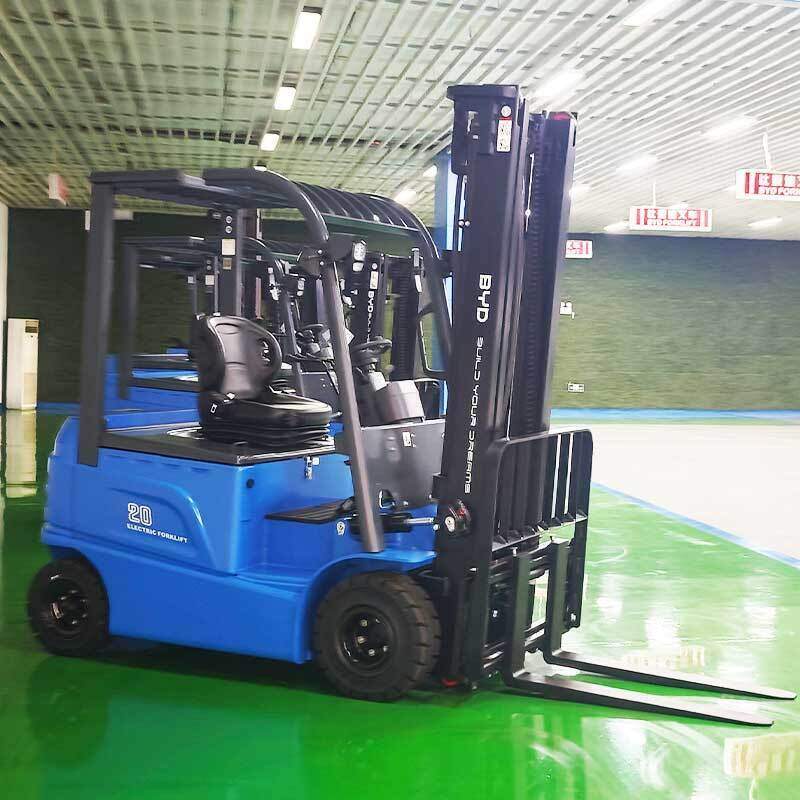
Many modern warehouses adopt hybrid operating modes that combine flexible manual workflows for non-standard goods and semi-automated processes for high-turnover standard cargo, creating unique challenges for lithium-ion forklift deployment that differ from all-manual or fully automated scenarios.
First, it is necessary to complete a full-scope route and scene assessment before formal deployment. Operators need to map all intersection areas for manually driven forklifts and semi-automated handling equipment, set reasonable speed limit parameters and preset obstacle warning functions for lithium-ion forklifts in these overlapping zones, and reserve sufficient safe operating space to avoid unintended work interruptions. This assessment also needs to take the weight of frequent handled cargo, average daily running mileage and site slope conditions into full consideration to select lithium-ion forklifts with matching load capacity and endurance to avoid performance waste.
Second, the supporting charging infrastructure should be arranged reasonably to fit the mixed operation rhythm. Instead of setting all charging stations in the semi-automated equipment exclusive area, operators can set multiple small fast charging points at the idle corners of manual operation zones, so that forklift drivers can complete short-time energy supplement during work breaks without occupying the operation resources of semi-automated equipment and breaking the continuous running schedule of automated process links.
Third, targeted operation training and parameter setting schemes are required for frontline personnel. Operators can set two independent operation modes for lithium-ion forklifts: one mode suitable for fully manual operation areas with no mandatory speed limit under manual control, and the other mode that automatically triggers low speed and active obstacle avoidance when the vehicle enters the semi-automated working zone. Regular training sessions on cross-scene emergency response can help workers get familiar with the operation specification of different modes, effectively reduce safety risks.
Fourth, the data interconnection between lithium-ion forklifts and existing warehouse management systems needs to be properly planned. The real-time battery status, vehicle position and idle status data of lithium-ion forklifts can be synchronously transmitted to the semi-automated warehouse management platform, while retaining the independent query authority for manual management teams, to eliminate information asymmetry between different operation links. Reasonable deployment of lithium-ion forklifts can effectively coordinate the flexibility of manual operation and the stability of semi-automated operation, bring steady improvement of overall operation efficiency without additional unnecessary resource investment.


