简体中文
 Русский
 Français
 Português
 Español
 لالعربية


First, take safety compliance assessment as the fundamental dimension of fleet management evaluation. You can sort out all operation records in the past 3 to 6 months, check the implementation status of operator safety training, daily pre-use inspection, and safety accident handling mechanism. Count the frequency of unauthorized operation, safety hidden trouble rectification rate and per 1000 operation hours safety incident rate, to judge whether the fleet management has built a stable safety bottom line. For electric forklift fleets, you also need to check the compliance of high-voltage operation specifications and charging management rules, to avoid hidden risks caused by non-standard operation.
The second core evaluation dimension is full lifecycle cost control. You need to classify and count all expenditure related to the fleet within the statistical cycle, including energy consumption cost, daily maintenance cost, parts replacement cost, insurance and annual inspection cost, and calculate the average operation cost per hour of each forklift. Compare the data with the industry average level of same type equipment, find out the links with abnormal cost, and judge whether the current fleet control strategy is reasonable. For new energy electric forklifts, you can also focus on the power consumption per 100 operation hours and battery attenuation status, to evaluate the cost advantage of the equipment in long-term operation.
The third dimension is resource allocation and operation efficiency evaluation. You can count the average daily operation hours of each forklift in the fleet, the empty load driving proportion, the waiting time of loading and unloading links, and the turnover efficiency of goods in the whole warehouse scene. If some equipment has long-term low utilization rate, while other equipment is in overloaded operation for a long time, it means that the current fleet scheduling strategy still has room for optimization. You can also compare the average cargo handling volume per forklift per working day with the expected target, to measure the actual output level of fleet management.
The fourth dimension is operation and maintenance response efficiency assessment. Count the average fault repair time of the fleet, the downtime duration caused by equipment failure, and the satisfaction score of on-site operator for maintenance service. A mature fleet management system should keep the equipment downtime rate at a low level through regular preventive maintenance, rather than passively handling faults after they occur.
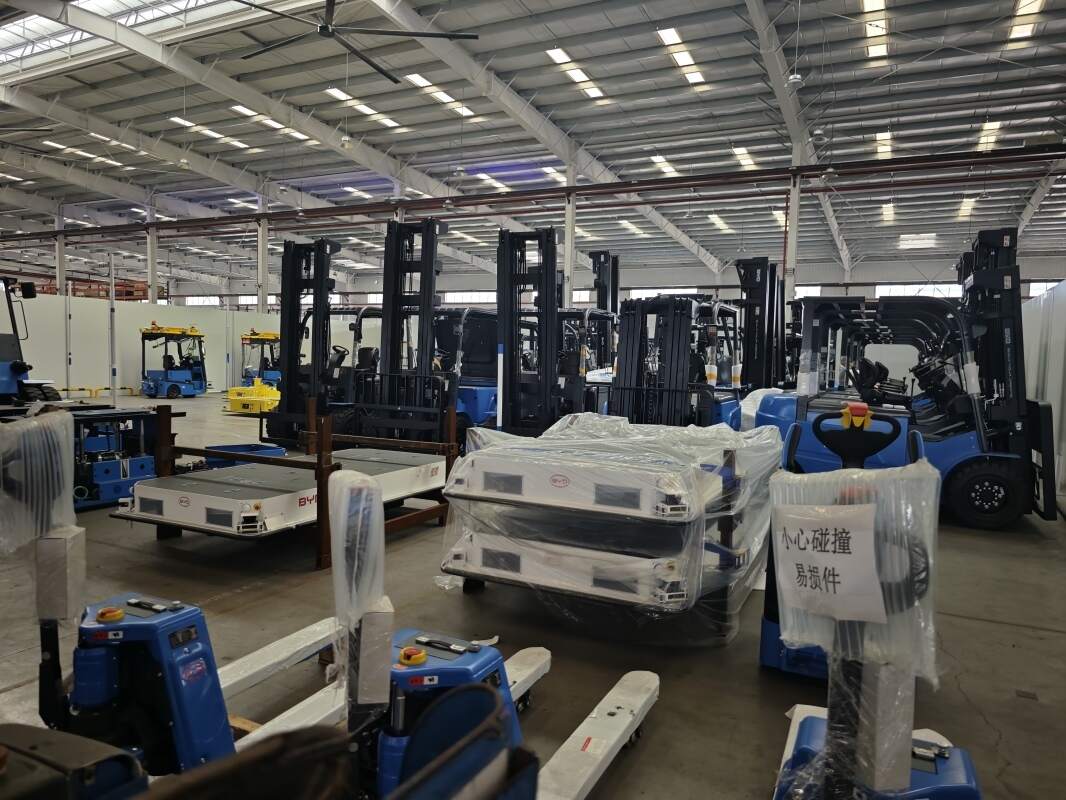
If you need professional support for electric forklift fleet management evaluation and optimization, Jianshu New Energy, which focuses on BYD electric forklifts, can provide you with targeted consulting services, you can send emails to [email protected] for further communication.