
 简体中文
 Русский
 Français
 Português
 Español
 لالعربية


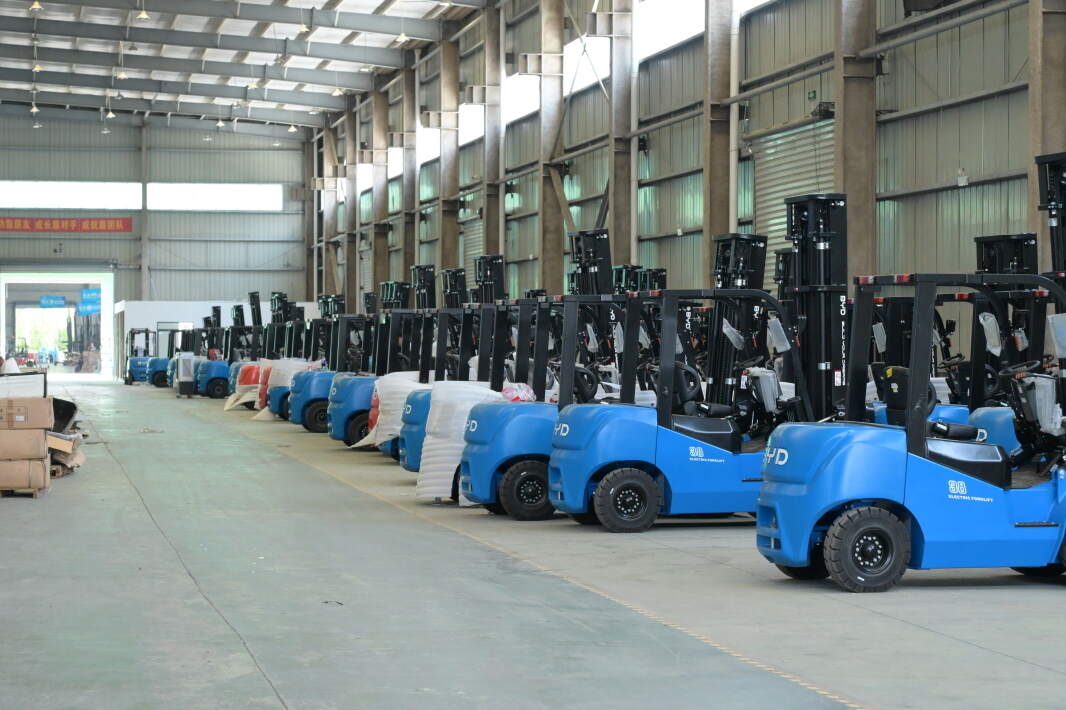
With the continuous development of green logistics, electric forklifts have become one of the most widely used material handling equipment in modern warehouse, manufacturing and distribution scenarios, featuring low noise, zero local emission and flexible operation performance. To help frontline operators and warehouse managers grasp correct usage logic, this guide sorts out practical professional points for daily application.
Core Operational Best Practices for Daily Use
Before each starting, operators need to complete basic check procedures, including confirming remaining battery power, testing braking and steering sensitivity, checking the wear condition of forks, and clearing obstacles in the planned operation route. During the moving process, operators should keep the load within the rated load range, avoid carrying people on the forks, slow down when passing corners, narrow passages and pedestrian crossing areas, and send prompt signals when the view is blocked. For high-lifting operation, keep the mast tilted back appropriately to ensure the stability of the goods, and do not tilt the mast when the goods are lifted to a high position.
Routine Maintenance to Optimize Equipment Status
Regular daily maintenance helps reduce unexpected equipment failure and prolong the overall service life of electric forklifts. Operators can wipe the surface of battery connectors regularly to avoid dust accumulation and moisture that may cause poor contact, check the hydraulic oil pipeline for leakage every week, inspect the wear degree of solid tires regularly, and add lubricating oil to the rotating connection parts according to the use frequency. It is not recommended to run the battery until it is completely exhausted before charging, and arrange charging operation in a well-ventilated and dry environment to avoid potential safety risks.
Reasonable Scenario Matching to Improve Operational Efficiency
Different working scenarios have different requirements for the performance parameters of electric forklifts. For narrow warehouse channels with limited space, models with smaller body size and smaller turning radius can be selected to reduce the difficulty of passing. For scenarios that need to complete high-position shelf stacking operations, it is necessary to confirm that the residual load at the maximum lifting height meets the actual use demand. For outdoor working scenarios with possible rain, models with appropriate waterproof protection level can be selected to adapt to complex environment conditions.


