
 简体中文
 Русский
 Français
 Português
 Español
 لالعربية


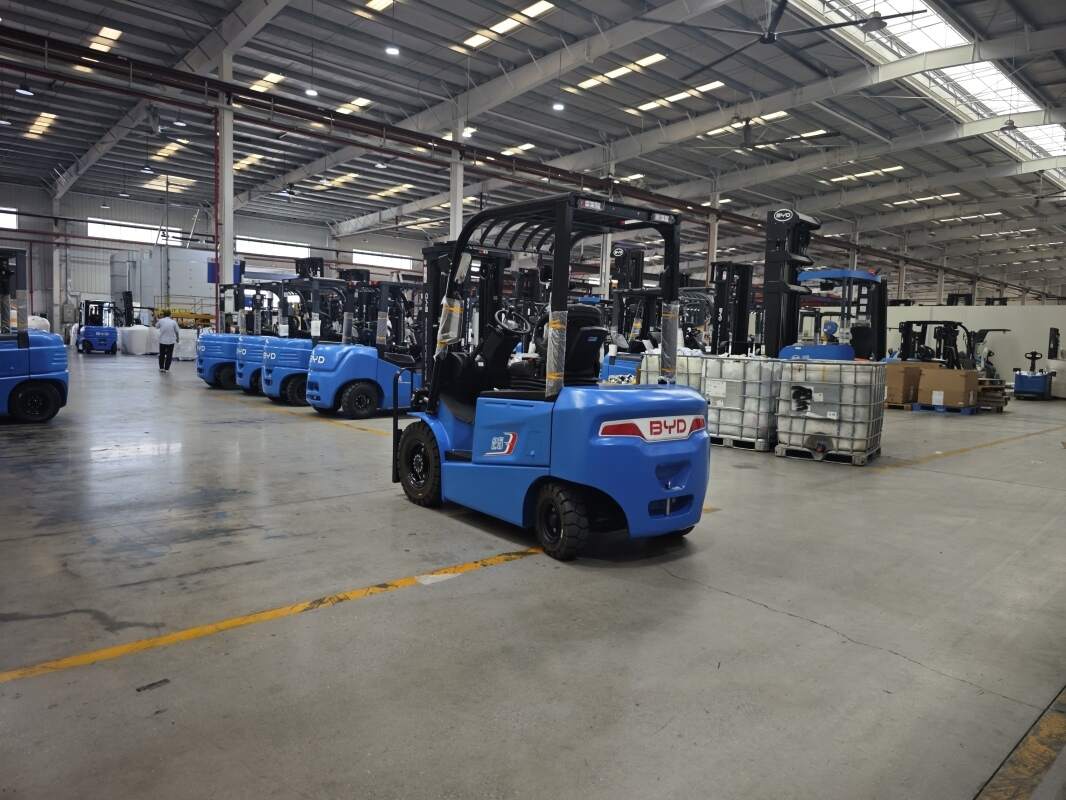
As one of the most widely used material handling equipment in modern warehouse and logistics scenarios, electric forklifts rely on low noise, zero local emission and flexible operation performance to support daily cargo turnover tasks for different industrial scenarios. Mastering correct use and maintenance methods can help relevant personnel make full use of equipment performance and avoid unnecessary operating faults.
Core Pre-operation Check Protocols
Before starting any operation task, operators need to complete a series of non-destructive pre-checks to rule out hidden risks. The first step is to confirm the remaining power level of the power system, check whether the connection parts of the power supply circuit are firm, and there is no exposed wire or liquid leakage phenomenon around the power components. The second step is to check the flexibility of the lifting and tilting hydraulic system, confirm that there is no blockage inside the oil circuit, and the wear degree of the cargo fork is within the safe allowable range. The third step is to test the sensitivity of the braking system, steering system and all light and prompt signal components, to ensure that all safety protection parts can respond normally during subsequent operation.
Standardized Daily Operation Best Practices
During the formal operation process, operators need to strictly follow the load capacity mark of the equipment, avoid long-time overload operation that may cause irreversible damage to the power and hydraulic system. When turning, lifting heavy cargo or passing through narrow channel areas, operators need to slow down in advance to avoid sudden steering or sudden braking that may cause cargo slipping or equipment sideslip. It is not recommended to keep the equipment in full power discharge state for a long time in high temperature working environment, and try to maintain a stable driving speed on the flat working road surface to reduce the loss of wearing parts. For long-distance cargo transfer across different functional areas of the warehouse, operators need to keep the cargo 10 to 15 centimeters above the ground to ensure the driving stability.
Routine Maintenance to Extend Equipment Service Life
After finishing the daily operation task, operators need to park the equipment in the specified designated area, lower the cargo fork to contact the ground, cut off the main power supply of the whole machine in time, and complete the simple surface cleaning work of the equipment body. Regularly arrange professional personnel to check the electrolyte level of the power unit, clean the dust accumulated on the surface of the motor and control elements, and add proper amount of lubricating oil to the transmission and rotation connection parts on schedule. Good maintenance habits can effectively reduce the frequency of unexpected faults, help the equipment maintain stable working performance for a long time, and reduce the comprehensive operating cost of the material handling link.


