
 简体中文
 Русский
 Français
 Português
 Español
 لالعربية


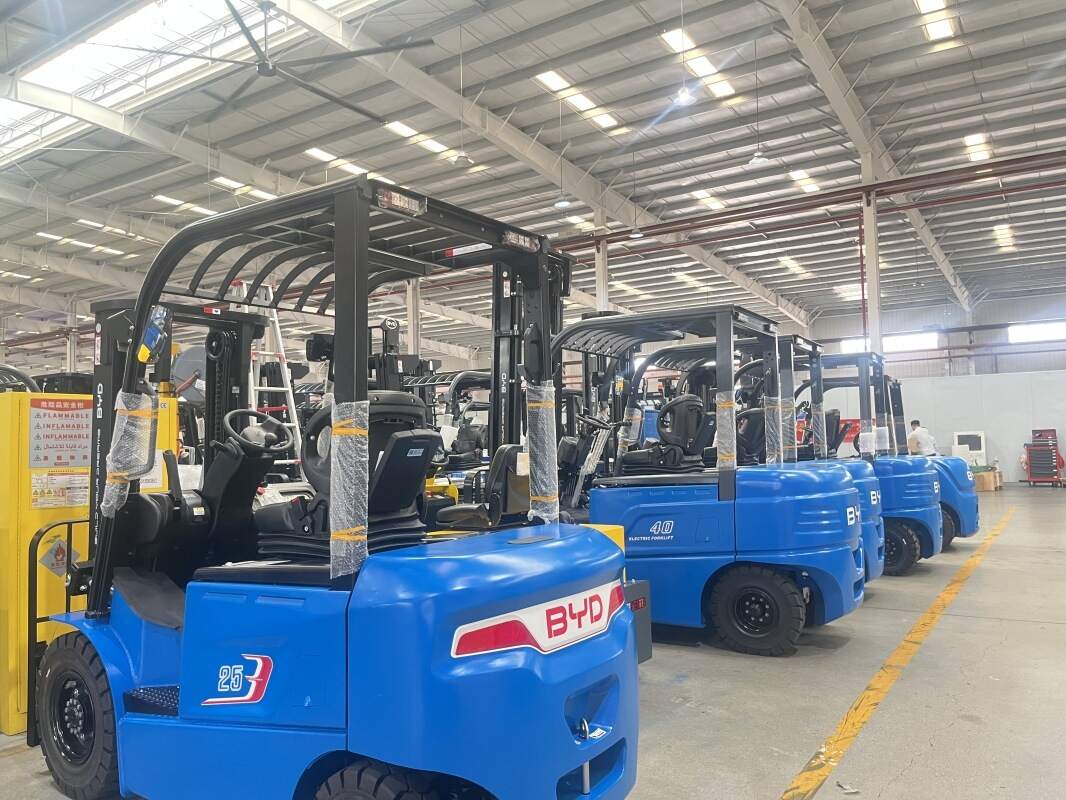
As low-carbon logistics concepts are widely promoted in the material handling industry, electric forklifts have become one of the most popular handling equipment for most warehouse scenarios due to their low noise, zero local emission and relatively low operating cost features. Mastering systematic use and maintenance rules can help operators give full play to the performance of the equipment, create safer operation environment and extend the service life of the equipment reasonably.
Core Standard Operation Norms for Daily Use
Before formal operation, all personnel need to complete corresponding normative operation training to get familiar with the basic structure and operation logic of the equipment. Before starting the machine, operators need to walk around the equipment to check the braking sensitivity, remaining power level, surface wear of forks, and the surrounding environment for potential obstacles. During operation, operators should keep the driving vision unobstructed, arrange the load placement position reasonably, and do not operate with loads that exceed the rated load range of the equipment. When passing through narrow channels, crowded personnel areas or turning corners, operators can send prompt signals in advance, avoid sharp steering and sudden braking, and keep the driving speed within a safe range. When leaving the operation position after work, operators should lower the forks to the position close to the ground, pull up the handbrake and cut off the main power supply.
Routine Maintenance Methods to Reduce Unnecessary Wear
Daily regular maintenance does not require too complicated operations, but it can effectively avoid most common faults. Operators can regularly check whether the wiring terminals of the power system are loose, keep the surface of the power battery dry and clean, avoid long-term full load discharge, and charge the equipment in time after the daily operation task is completed. It is also necessary to regularly check the wear degree of driving wheels, whether there is oil leakage in the hydraulic lifting system, and add proper amount of lubricating grease to the movable hinge parts of the equipment on schedule. In addition, operators can regularly clean up the sundries, dust and broken packaging fragments accumulated in the gap of the body, to prevent these foreign matters from affecting the normal operation of the transmission system.
Scenario Adaptation Tips for Different Working Environments
According to the actual operation scenarios, operators can adjust the use scheme of electric forklifts to get better use effect. For example, when working in low temperature cold storage scenarios, corresponding low-temperature protection measures can be taken for the power system to avoid performance attenuation under ultra-low temperature environment. When working in food and pharmaceutical storage scenarios, keeping the body surface clean can reduce the risk of residual pollutants contaminating the goods. When carrying goods on sloped roads, operators should control the driving speed, keep the load side facing up the slope, to avoid the risk of goods slipping. Matching equipment with appropriate rated load according to the conventional weight of handling goods can also effectively improve the overall operation efficiency of the whole warehouse.


