
 简体中文
 Русский
 Français
 Português
 Español
 لالعربية


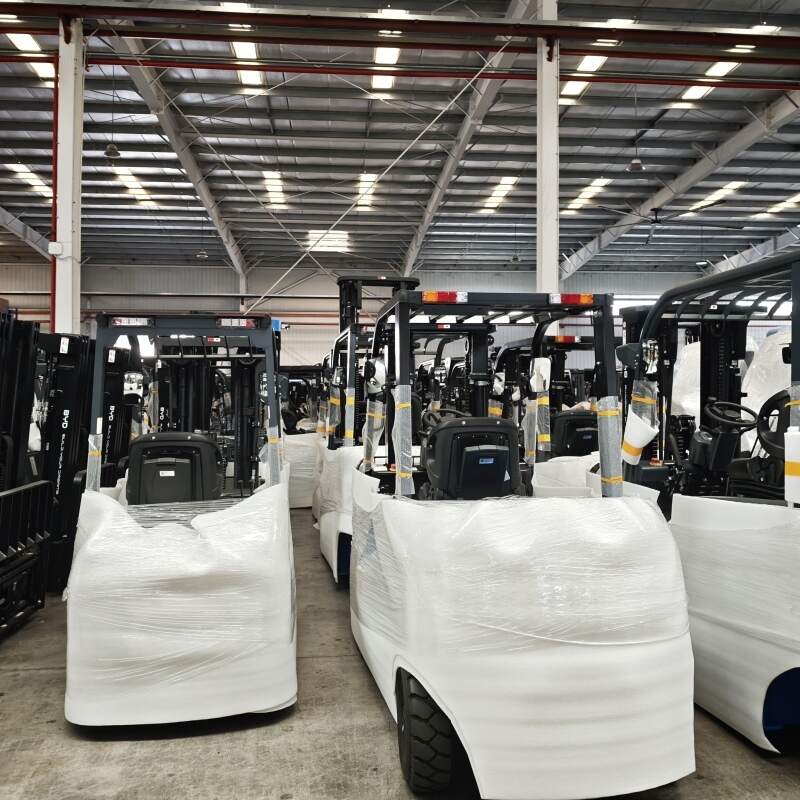
As core material handling equipment widely used in modern warehouses, manufacturing workshops and distribution centers, electric forklifts have been recognized by most practitioners for their low noise, zero local emissions and relatively low operating cost characteristics. Mastering systematic operation and maintenance knowledge can help extend the service life of the equipment and reduce the potential safety risks in daily work.
Core Standardized Operation Specifications
Before starting the equipment, operators need to conduct a full visual check of the tire condition, brake sensitivity, lifting mechanism flexibility and remaining power level, confirm that no sundries are blocked around the operating channel, and no unrelated personnel stay in the operating range. During the operation process, operators should avoid rapid steering, sudden braking and overloading beyond the rated load range, keep the load goods in a stable centered state when driving on ramps, and do not carry out lifting or unloading actions on non-flat slopes. After the daily work is finished, the forklift should be parked in the designated dedicated area, the lifting frame should be lowered to the lowest horizontal position, the power supply should be cut off completely, and the hand brake should be locked to avoid accidental sliding.
Routine Maintenance and Daily Care Guidelines
For the power system that supports the normal operation of electric forklifts, operators should check the connection state of the power interface regularly, avoid long-term over-discharge of the power unit, and arrange targeted charging according to the official recommended parameters to maintain the overall performance of the power unit. For the transmission and walking parts, remove the accumulated dust, debris and sundries on the surface every fixed cycle, add appropriate amount of special lubricating oil to the rotating shaft parts according to the use frequency, and check the wear degree of the brake pads and tire patterns regularly, replace the aging accessories in time when the wear reaches the preset warning value, to avoid affecting the normal use experience. The surface of the vehicle body can be wiped with a soft dry cloth regularly to prevent the corrosive liquid from eroding the metal shell and circuit components.
Scenario Adaptation and Energy Efficiency Optimization Tips
In different application scenarios, operators can adjust the operating parameters of the electric forklift appropriately according to the actual environment. For narrow channel operation scenarios, the speed can be controlled at a relatively low level to improve the maneuvering accuracy and reduce the collision risk. For long-distance continuous handling scenarios, the running route can be planned in advance to avoid repeated detours, which can effectively reduce unnecessary power consumption. Regularly sort out the stored goods to set a reasonable access route, which can also give full play to the handling efficiency of the electric forklift, and bring more stable operation performance for the long-term use of the equipment.


