
 简体中文
 Русский
 Français
 Português
 Español
 لالعربية


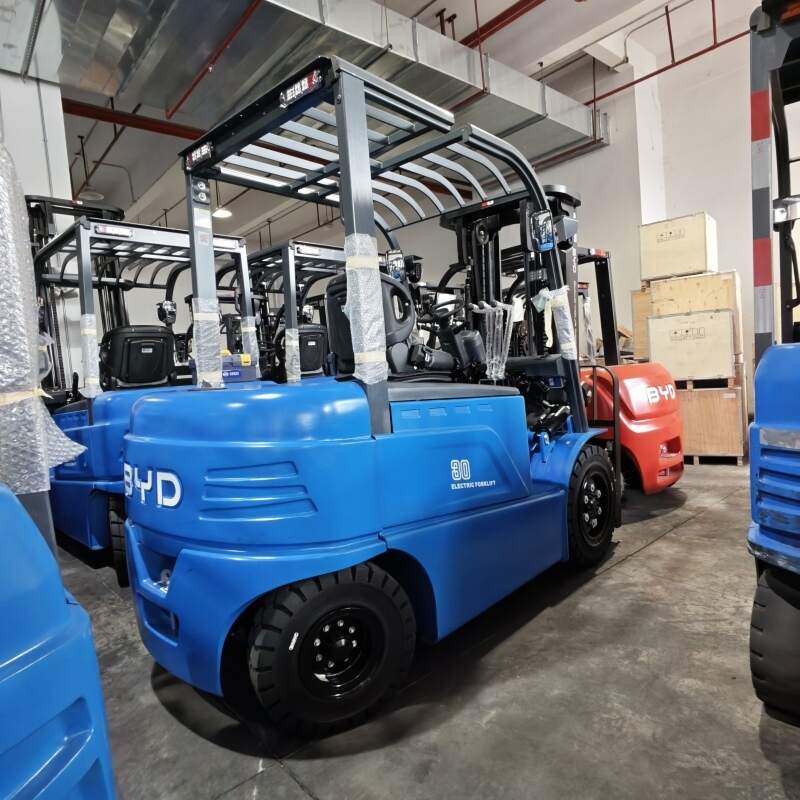
As low-carbon and high-efficiency material handling equipment, electric forklifts have been widely used in modern logistics, manufacturing and distribution scenarios in recent years. For frontline operators and warehouse managers, mastering correct use and management methods can give full play to the equipment’s inherent performance, and reduce unnecessary operating costs to a large extent.
Core Operation Specifications for Daily Scenarios
Before starting the equipment, operators need to conduct a quick check of the brake system, power indicator, fork structure and surrounding working environment to confirm that there are no hidden safety hazards before formal operation. During the driving process, keep the running speed within the specified range, avoid sharp steering and sudden braking on uneven roads, and keep a safe distance from surrounding personnel and stacking goods. When picking up and placing goods, adjust the fork spacing according to the size of the pallet, keep the goods at a low position when driving, and avoid lifting the goods to a high height for long-distance movement, so as to prevent the center of gravity from shifting and causing unstable equipment operation.
Routine Maintenance Points to Reduce Equipment Wear
Daily maintenance work can be divided into daily inspection after work, weekly partial inspection and regular professional maintenance according to the use frequency. For the power system, pay attention to the standardization of charging operation, avoid over-discharging the power core for a long time, and keep the surface of the power unit clean and dry to avoid liquid erosion. For the walking and hydraulic components, check the lubrication status of the rotating parts regularly, replenish the professional lubricating oil in time, and clean the sundries stuck on the wheel structure and transmission parts after each shift. It is not recommended to carry out non-standard disassembly and modification of the equipment structure without professional guidance, so as to avoid affecting the original operation stability.
Scenario Adaptation Suggestions to Improve Use Efficiency
In different operating environments, the use rules of electric forklifts can be adjusted appropriately according to the actual situation. In narrow aisle scenarios, choose a matching body size to reduce the turn radius reserved in advance, and avoid rigid collision between the body and the shelf structure. In low-temperature high-humidity working environments, pay more attention to the protection of the electrical connection parts, and appropriately extend the preheating time of the equipment before starting. For long-time continuous operation scenarios, arrange reasonable shift rotation and equipment switching, so that the equipment can get proper rest within the allowable load range.


