
 简体中文
简体中文 Русский
 Français
 Português
 Español
 لالعربية

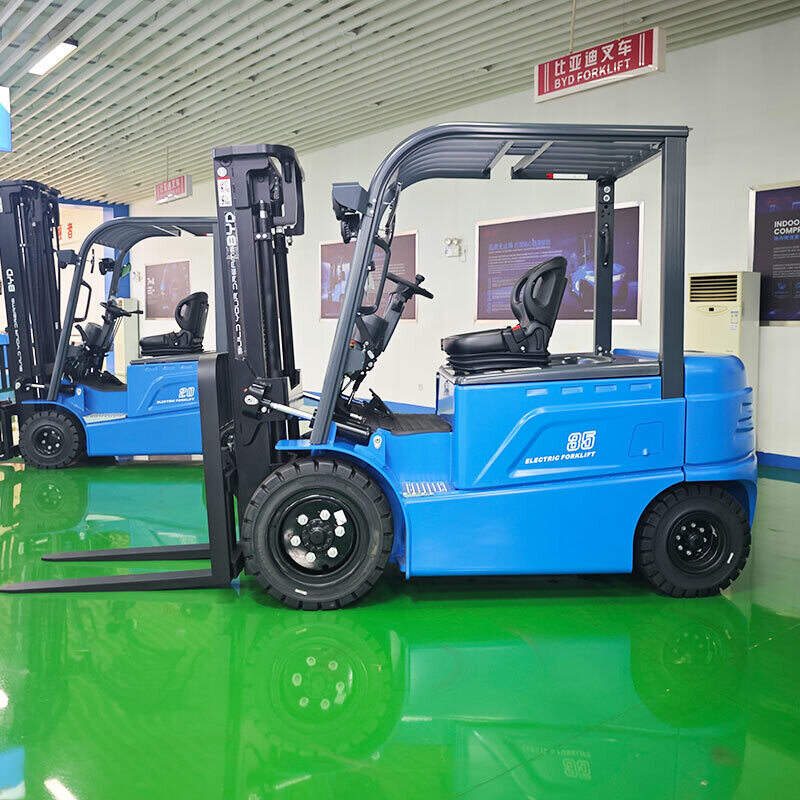
Cross-border goods temporary storage bonded warehouse sites usually take charge of the short-cycle turnover of inbound goods to be declared, inspected and confirmed for subsequent outbound distribution. These sites have strict rules on operation specifications, environmental hygiene and access permission, which put forward higher requirements for the efficiency and safety of cargo handling equipment. Compared with ordinary storage scenarios, the operating environment of such bonded warehouses has distinct particularity, which makes the application of electric pallet jacks show strong scenario matching advantages.
The first core use case is short-distance cargo transfer between the unloading platform and designated temporary storage positions. Most bonded sites do not allow fuel-powered equipment to enter the operation area to avoid potential safety risks and residual oil pollution that may affect customs supervision and inspection. Electric pallet jacks produce no exhaust emission in the whole operation process, which fully meets the environmental protection and safety access standards of such sites. Operators can transport full-pallet cross-border goods from the unloading area to the corresponding temporary storage area directly, without manual handling of scattered goods, effectively reducing the risk of outer package damage of goods, and cutting down the time consumption of single transfer by more than 60% compared with traditional manual handling tools.
The second main use case is cargo shifting between different supervision zones. After a batch of cross-border goods finish the random inspection process of the customs, the staff need to transfer the qualified goods from the inspection waiting area to the release-approved temporary storage area within the specified time window. Most of the pre-built bonded warehouse sites only reserve 1.8-meter-wide passages for supervision and management requirements, and the flexible steering performance of electric pallet jacks can adapt to such narrow passage conditions without additional transformation of the site. The operation process will not leave stubborn oil stains on the ground of the supervision channel, which conforms to the site tidiness management rules of customs supervision areas.
The third common use case is cargo collection before outbound distribution. When all customs declaration documents of the stored goods are confirmed to be valid, the operation staff need to collect the same batch of goods scattered in different storage points to the outbound waiting area. The stable load performance of electric pallet jacks can meet the weight requirements of most conventional full-pallet cross-border goods. The low-noise operation feature will not interfere with the customs declaration and verification work of other staff in the adjacent area, nor will it trigger the irrelevant safety alarm system inside the warehouse. For daily operation, the management team only needs to carry out regular routine inspection on the power system and braking system of the equipment, and make corresponding use records in accordance with the site management regulations, to give full play to the application value of the equipment in the bonded warehouse scenarios.


