
 简体中文
简体中文 Русский
 Français
 Português
 Español
 لالعربية

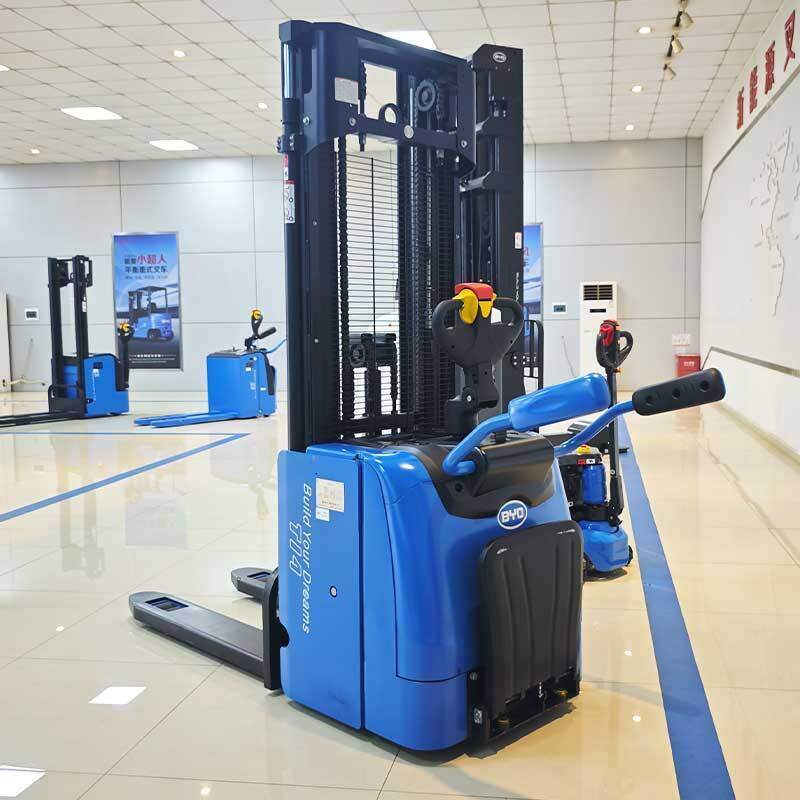
Automated parts storage facilities usually set strict standards for operation continuity, load accuracy and space utilization, especially for scattered supplementary handling tasks that are not fully covered by automated guided vehicles, lithium-ion reach trucks have become a highly flexible matching option as long as operators follow proper standardized operation norms.
First, make complete pre-operation preparation before vehicles enter the core working zone. Conduct full pre-shift status check for the lithium-ion reach truck, confirm the remaining power level, fork telescopic function and safety sensor status are all within normal range, to avoid sudden shutdown in the narrow aisle of parts storage. It is recommended to arrange dedicated charging areas outside the core automated operation zone, make full use of the opportunity charging characteristic of lithium batteries to replenish power during task gaps, which will not interrupt the continuous handling demand of parts supply lines.
Second, match operation parameters with specific task scenarios. For supplementary handling tasks of small and medium-sized mechanical or electronic parts that need to be transported from temporary buffer area to designated automated rack positions, adjust the fork lifting speed according to the actual height of storage racks, keep the running speed within the safe range set for narrow aisle, maintain a safe distance of more than 0.3 meters from surrounding automated operation equipment to avoid mutual interference. For handling of precision parts with high anti-vibration requirements, properly lower the travelling speed on uneven road sections, avoid sharp steering or sudden braking during operation, to ensure that the transported parts will not be damaged by accidental shaking.
Third, complete daily management optimization to support long-term stable operation. It is suggested to arrange fixed operation routes for lithium-ion reach trucks according to the actual distribution of supplementary handling tasks, mark the no-entry zones of heavy-load automated equipment, regularly train operation personnel to be familiar with the cooperation logic between manually operated reach trucks and existing automated systems. Conduct regular maintenance check for the vehicles every working week, clear the dust accumulated on the power module and operation control parts, extend the stable service life of the equipment under high frequency operation state. Such standardized application norms can give full play to the flexible advantage of lithium-ion reach trucks, fill the service gap of full automated storage system in scattered, temporary and special handling demands, and effectively improve the overall operation fluency of the whole parts storage facility.


