简体中文
 Русский
 Français
 Português
 Español
 لالعربية


Forklift turning radius is a core operational parameter that directly affects daily material handling efficiency, site layout planning and operation safety, which is easily overlooked by many warehouse operators and forklift practitioners in daily management. A clear understanding of forklift turning radius requirements can effectively reduce the probability of vehicle collision, cargo damage and personnel safety risks, and maximize the utilization of limited warehouse space.
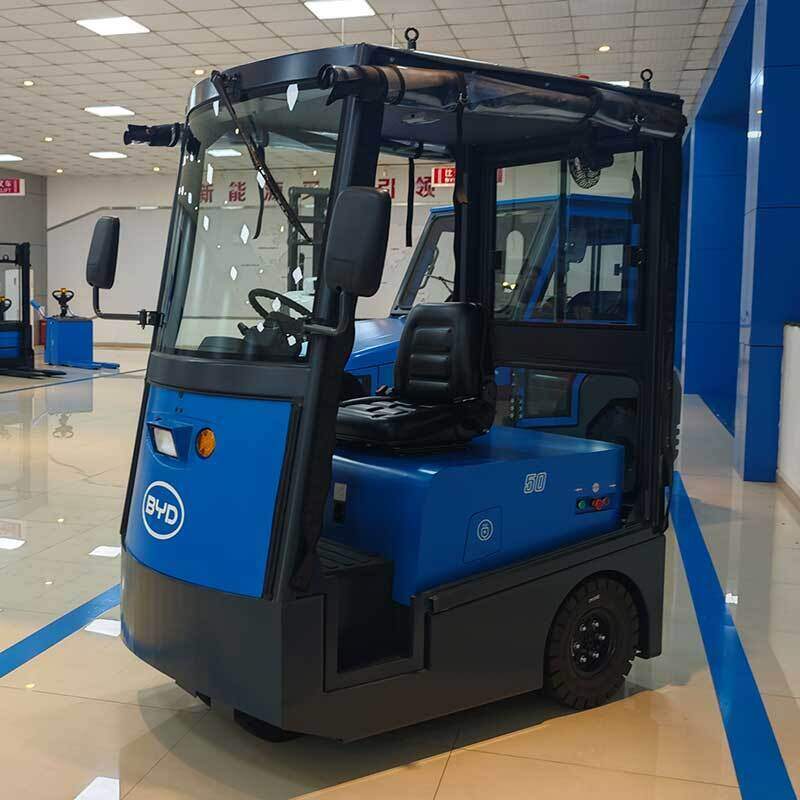
First, it is necessary to clarify the basic definition of forklift turning radius requirements. The most commonly referenced index is the minimum outer turning radius, which refers to the minimum horizontal distance from the outermost edge of the vehicle body to the tangent line of the driving track when the forklift runs at low speed with the steering wheel turned to the maximum limit. The matched minimum inner turning radius refers to the minimum distance from the innermost point of the vehicle to the same turning center. For conventional counterweight electric forklifts with 1 ton to 3 ton rated load, the standard reference turning radius requirement is between 1.7 meters to 2.8 meters, which is suitable for ordinary operation channels with a net width of more than 3 meters. For narrow aisle special electric forklifts, the optimized structural design can make the minimum turning radius far lower than the conventional standard, which is suitable for intensive storage scenes that require higher space utilization.
Next, operators need to select appropriate forklift turning radius requirements according to actual application scenarios. Before purchasing forklifts or adjusting warehouse layout, you need to measure the actual net width of all operation channels, the gap between adjacent goods stacks, and the distribution of fixed obstacles in the steering route. It is not recommended to blindly pursue a smaller turning radius beyond the actual demand, as it may affect the overall load stability of the vehicle under heavy load, nor is it recommended to choose a model with an excessively large turning radius, which will waste a lot of valuable storage space and reduce the number of available cargo locations.
In daily operation management, relevant personnel should also confirm the rated turning radius parameters of the electric forklift in use in advance. When carrying heavy loads, operators need to reserve enough steering margin according to the actual load weight, avoid sharp steering at high speed in the narrow channel, and regularly check the working condition of the steering system to ensure that the vehicle always meets the rated turning radius design standard in the long-term use process.
If you need professional support for electric forklift parameter matching and scene scheme customization, you can contact us. We are Jianshu New Energy, focusing on BYD electric forklift, you can send e-mail to [email protected] for more detailed consultation.